

How inclusive and disability choirs can rehearse and perform together, even when some singers can’t get into the room.
Some people can’t sing in a choir because they can’t get into the room.
Lyrekos lets them sing anyway. Each singer performs their part at home, in a web browser, and hears it combined with the rest of the choir. Nobody has to travel.
It isn’t a live jam session. Everyone sings to the same shared reference — a backing track, the choir’s previous take, or a conductor — rather than to each other. For a lot of inclusive and disability choirs, those are the right trade-offs.
Where this came from
After our first four-part demo (SATB: soprano, alto, tenor, bass), Alex Siegers, who conducted the session, asked the singers what uses they could imagine. Will Darbyshire, a music therapist in Australia, answered first:
I’ve worked over the years with a lot of disability groups and particularly disability choirs, where they consistently say one of the largest issues is getting people into the room and finding time and finding a safe space… some are really sensory seeking, some are so sensory avoidant… they’re still excellent musicians.
Will Darbyshire, music therapist
I hadn’t thought about it that way. A few weeks later I sat down with Will (on Lyrekos, naturally) to learn what he knows.
The singing isn’t the problem
Will has spent years building music therapy groups for disability communities. One was a choir for people with early-onset dementia in New Zealand. They met weekly, sang, and had a cup of tea afterward.
His view: the singing was partly an excuse. The point was the routine, the identity, and the reason to be with other people.
Then COVID took the room away. Will’s observation stuck with me. The worst thing you can do is build a community and then take it away. It makes the isolation people had before more visible.
The singers hadn’t lost their voices. They’d lost their way in.
Who can’t get to choir rehearsal?
More people than you’d think, and for very different reasons.
People who are far away. In the Australian outback, your nearest neighbor may be 50 kilometers off. Kids there go to school over the radio and internet through the School of the Air. Distance is a disability of geography.
People who can’t easily travel or stand. Wheelchair users, people who can’t stand through a two-hour rehearsal, and people who can no longer drive. At home, they sing seated, in their own space, with no long ride to recover from.
People for whom the room itself is the barrier. For an autistic singer, or someone with severe social anxiety, a rehearsal hall can be too loud, too crowded and too much. Will put it simply. With a screen in between, you can mute yourself, turn off your video, step back and come back in. In a hall, you’d have to stand up, walk out, collect yourself and walk back in with everyone watching.
People whose health is unpredictable. Fatigue, treatment, surgery, recovery. Will knows a choir director whose attendance often runs at 50 to 60 percent, not because members don’t want to come but because their medical treatment makes it physically hard. Singing on a good day, at home, beats missing six weeks.
Different barriers, same answer: let them take part without being in the same room.
What does a week look like?
Will walked me through how he’d run it. Most of it is what any good choir already does. Some of it is new.
Before the session, the conductor sends out a full recording of the piece plus a separate track for each part. Then the conductor records a short video covering pronunciation, interpretation, entrances and how they’ll cue. Will was preparing a sixteenth-century Magnificat while we talked. Is that Latin “tu” or “too”? Settle it on video once instead of in rehearsal ten times.
During the week, singers practice against the same recording every time. Will thinks this matters more than people expect. In a live rehearsal you can drift between the person on your left and the person on your right. A recording doesn’t drift.
In the session, the choir sings a take, every singer against the same reference. Between takes, Lyrekos switches back to an ordinary video call. The conductor gives notes, singers talk, and people can laugh about the take that went sideways. Then they go again.
Will suggested splitting the job in two: a director who handles the music, and a producer who handles the technical side. The director can then keep coaching while someone else watches levels and keeps the takes moving.
His phrase for the whole approach comes from a T-shirt he’d seen: Do it in pre, not in post. Fix it while the singers are there, not in the editing afterward.
Start with the Beatles, end with your own band
What do you give a nervous singer to sing along to on their first take?
Will pointed out that many choir members are in a choir because they don’t like hearing themselves alone. “I’m not a soloist, but I like singing in a group.” Asking them to start from silence, or alongside everyone else’s shaky first attempt, is a good way to lose them.
So start with a finished, professional recording, ideally with each part on its own track. On the first take, every singer hears a complete, confident choir around them.
Then, take by take, swap out the professional parts and put the choir’s own recordings in their place. The polished reference fades. The choir’s voices take over. By the end, maybe only a click track is left, and everything you hear is them.
It’s like starting with the Beatles and ending up with your own cover band. With the right director, what you end up with isn’t a copy. It belongs to them.
Will it sound like one choir?
Everyone records in a different room with a different microphone. Left alone, that sounds like twelve people on twelve phone calls.
Two things help.
First, level matching. After each take, Lyrekos adjusts each recording so that every singer sits at the same perceived loudness. Nobody’s voice sticks out and leaves them feeling exposed.
Second, a shared virtual room. We place every voice in the same simulated acoustic space, with the same reverberation off the same walls. When I tried this by hand on recordings from our earlier sessions, it sounded far better.
You don’t need a studio microphone. Apple AirPods and similar earbuds with a built-in mic do a respectable job. Will uses his for work every day. Singers do need headphones or earbuds so the backing track doesn’t bleed into their microphone, and they need to run a short calibration once.
What Lyrekos can’t do
Best to say this plainly.
It isn’t for jamming. Singers follow the shared reference, not each other, so there’s no real-time back-and-forth. That’s the design, not a bug. It’s what lets each person sing from wherever they are.
Software can’t replace a helping hand. For people with dementia, intellectual disability, blindness, or limited use of their arms and hands, someone has to set up the device, put on the headphones and press the button. A caregiver, a family member, a companion. Lyrekos can make that routine simple and repeatable. It can’t make it unnecessary.
It doesn’t beat being in the same room. If you can be in the same room, be in the same room. Most things are better in person. Lyrekos is for when in person isn’t possible, or isn’t possible every week.
A way back into the room
That last point leads somewhere interesting.
For some singers, Lyrekos doesn’t replace rehearsal. It’s a way into it.
Imagine an autistic singer who can’t face ten rehearsals in a loud hall but could manage one. They learn the music at home. They learn the other parts, the conductor’s cues and how the piece is supposed to go. When they walk in for that one rehearsal, nothing is new except the room.
Will called this the hybrid model. I think of it as graduated participation: practice alone, then join online with your camera off, then join a small local group, then come to the full rehearsal. Each singer goes as far as they can, at their own pace.
And then the concert
Choirs build toward something. For disability choirs, the audience is often mostly family, and family wants to hear it.
With Lyrekos, the audience listens in close to real time, with a delay of about three seconds. They can watch from home, or gather in one place and watch together.
During each song, the audience can chat. The singers can’t see it. As Will said, nothing would distract a singer more than reading comments about themselves.
Between songs, the whole event switches back to a video call. Grandparents can tell the soprano she was wonderful. The soprano can hear it.
You don’t get that in a concert hall. You sit for two hours and talk in the lobby afterward. Here you lose the shoulder-to-shoulder feeling, but you get conversation in the middle of the concert. That’s not a smaller kind of socializing. It’s a different one.
Run an inclusive choir?
If you run a disability choir, a community choir, or any group whose members have trouble getting to the room, we’d like to help you. Write to me at lance [at] kinetic.audio.
Frequently asked questions
Can someone with a disability sing in a choir from home?
Yes. With Lyrekos, each singer sings their part at home in a web browser and hears it combined with the rest of the choir. Singers who can’t travel, can’t stand for long, or find a rehearsal hall overwhelming can take part without being in the room.
Does an online choir work for autistic singers or people with social anxiety?
For many, yes. Singers can mute, turn off their camera, and step away and come back without anyone watching. Some use online rehearsal to learn the music and the routine before attending an in-person rehearsal.
Do singers need special equipment?
No studio microphone is needed. Earbuds with a built-in microphone, such as Apple AirPods, work well. Singers do need headphones or earbuds and a one-time calibration.
Can choir members sing together live, in real time?
Yes, together, but not by reacting to each other. Everyone sings at the same time against one shared reference — a backing track, the choir’s previous take, or a conductor leading live — and Lyrekos keeps every voice aligned to it. What it doesn’t do is real-time back-and-forth, like jamming.
Can family and friends watch the performance?
Yes. The audience hears the performance about three seconds behind real time, can chat during songs without the singers seeing it, and can talk with the singers on video between songs.
What about singers with dementia or limited hand mobility?
They can take part, but a caregiver or family member usually needs to set up the device and headphones. Lyrekos keeps that routine simple; it doesn’t replace the helper.
The choir doesn’t have to be in one room.
It just has to be one choir.
One choir, wherever the singers are
Tell us about your choir — who sings, what keeps them out of the room, and what you’d like to perform.
See how it works for choirsTry it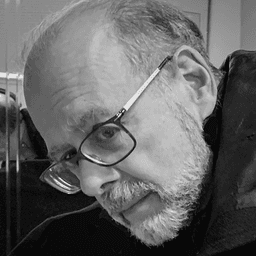
Lance Glasser
Lance is CEO and Co-founder of Kinetic Audio Innovations. He was previously a faculty member at MIT, Director of the Electronics Technology Office at DARPA, and CTO at KLA. He also makes sculpture, which has nothing to do with audio but explains the hundreds of pounds of bronze in his house.